

Why Sleep Matters

Neuroscience • May 6, 2020
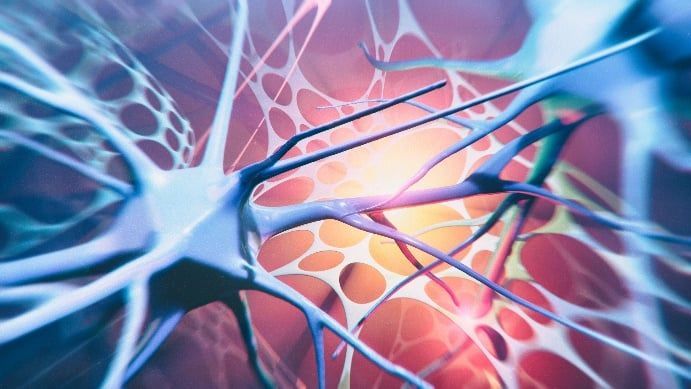
A close up of a brain cell with a light coming out of it

The purpose of sleep has been the subject of debate for millennia. The necessity of sleep across animal species suggests that sleep plays a vital function. One of the greatest mysteries in biology is why sleep matters. Why is sleep restorative? And, why does the lack of sleep impair brain function? According to Dr. Lulu Xie, of the University of Rochester Medical Center, sleep deprivation reduces learning, impairs performance in cognitive tests, prolongs reaction time, and in the most extreme cases, can lead to dementia and even death.


Without sleep, scientists have found that lab mice die after two weeks. Although it is still not precisely known why sleep is necessary, Dr. Xie, and her team, are uncovering the mystery of how sleep enhances the removal of waste products from our brain.


Amazingly, the brain has a simple, yet elegant, way to cleanse itself, while we sleep


During our waking hours, the brain produces toxic byproducts as a result of regular, metabolic activity. In the short-term, these metabolic waste products can interfere with normal cell communication, and in the long-term, can cause irreversible damage to brain cells. One such neurotoxic protein is beta-amyloid, a sticky compound that can accumulate in the brain, disrupting communication between brain cells, eventually killing them. Accumulation of beta-amyloid protein in the brain is one of the culprits thought to be one of the causes of Alzheimer’s disease.


The brain’s mechanism for clearing out toxic byproducts involves the Cerebrospinal fluid (CSF) that fills the interstitial space surrounding neurons in the brain. CFS continually travels throughout the brain collecting waste byproducts and transports them to the lymphatic system for ultimate disposal and degradation by the liver. Dr. Xie’s research showed that this cleansing process dramatically increases in the brains of mice while they sleep, in a simple, yet elegant way.


Dr. Xie’s team reported that while the mice were sleeping, the interstitial space of their brains, increased by 60%, allowing for a dramatic increase in the volume of CSF and the clearing of toxic byproducts. The team was able to observe this process by injecting radioactive tracers into the CFS of mice so that they could watch as it flowed through the brain. They found that when the mice were awake, there was more resistance to CSF. However, when they were asleep, the interstitial space between brain cells increased by as much as 60%, a vastly larger space, allowing for significantly more efficient removal of waste products.


Why sleep matters is still one of the greatest mysteries in biology, but Dr. Xie’s team gives compelling evidence to answer the questions of why sleep is restorative, and, as important, why the lack of sleep impairs brain function.

References:

June 4, 2026
After a distinguished 30-year career as a Special Ops Marine, Greg Gillespie returned home with three Purple Hearts and severe combat injuries, including traumatic brain injury (TBI) and post-traumatic stress disorder (PTSD). Like many veterans, he found himself stuck in what he calls the "hamster wheel" of the VA medical system, heavily medicated by a wheelbarrow full of psychotropic drugs but finding no real relief from his debilitating migraines, chronic pain, and depression.  Everything changed when Greg volunteered to be the very first test subject for a new, experimental brain-balancing technology. In a single 13-minute, completely non-invasive session, Greg experienced a miraculous shift: his migraine vanished "like flicking a light switch," and by the next morning, his double vision and chronic pain were almost entirely gone . He also slept completely through the night without nightmares for the first time in seven years. That life-altering moment transformed Greg from "patient number one" into a dedicated practitioner who has since treated over 8,000 people, eventually leading him to his current role as CEO. In the featured video below, originally recorded for the Care at Scale podcast with host Greg Reiners, Greg Gillespie shares his incredible full story. He breaks down exactly how Neurogen's passive neuromodulation works to gently suggest balance to the brain's electrical frequencies, allowing the brain to repair itself without requiring the patient to actively focus or participate . Greg also shares astounding stories of patient recoveries—ranging from stroke victims to paralyzed individuals—and discusses his ongoing mission through BBforVets.org to provide complementary treatments to veterans. Watch the full video below to discover how Neurogen is helping people reclaim their quality of life.
Abstract representation of neural pathways and brain balancing technology for migraine relief.
April 3, 2026
Discover how Passive EEG-Guided Neuromodulation provides a safe, drug-free alternative for chronic migraine relief. Read the full executive summary on brain balancing.

September 26, 2025
Revolutionizing Patient Care: How New Approaches in Chiropractic are Transforming Outcomes
Show More